This comparison is most useful when both scooters look viable and you need the decision to break on charging, value, or day-to-day fit.
Scooter comparison
The 450S makes the stronger case if you want speed, sharper responses, and the Ather software experience, while the Chetak 3501 remains easier to justify if service confidence, easier AC charging, and a calmer family-scooter brief matter more.
Use this comparison to break the tie on charging, value, and fit, then validate the winner with your own running-cost estimate.
| Spec | Ather 450SStandard | Bajaj ChetakC3501 3.5 kWh |
|---|---|---|
| Price & cost | ||
| Reference price | ₹1,27,888 | ₹1,57,140 |
| Running cost (est.) | ≈ ₹0.26/km | ≈ ₹0.27/km |
| Performance | ||
| Top speed | 90 km/h | 80 km/h |
| Motor power | 5.4 kW | — |
| Battery & charging | ||
| Battery | 2.9 kWh | 3.5 kWh |
| Real-world range | 90-110 km | 105-125 km |
| Efficiency | 34 km/kWh | 33 km/kWh |
| Charge time | ~8.3 hrs | ~3 hrs |
| Fast / 0–80% charge | 0-80% in 6.36 hrs | 0-80% in 3 hrs on the bundled 950 W charger; no DC fast charging |
| DC fast charge | Ather's official 450 page advertises a 30 km top-up in 10 minutes for the 450 family, but that remains an Ather Grid fast-top-up story rather than open public DC charging. | No |
| Space & practicality | ||
| Under-seat storage | 22 L | 35 L |
| Kerb weight | 108 kg | — |
| Ground clearance | 170 mm | 168 mm |
| Wheel size | 12-inch / 12-inch | 12 inch |
| Brakes | Disc / Disc, CBS | Disc / Drum, CBS |
| Features | ||
| Display | Digital (non-touch) | 5-inch TFT touchscreen |
| Connected (app/Bluetooth) | Yes | Yes |
| Riding modes | 4 | 2 |
| Hill hold | No | Yes |
| Water resistance | IP67 | — |
| Warranty | 3 yr / 30,000 km | 3 yr / 50,000 km |
| Verdict | ||
| Best for | City riders who want sharper performance than conservative family scootersBuyers who value Ather software polish without stepping up to 450X pricingUrban commuters in cities with dependable Ather Grid coverage | Riders who want the fully loaded Chetak — the C3501 is the only trim with a 5-inch TFT touchscreen, full map navigation, keyless ignition and remote startDaily commuters who want range and pace together — 153 km claimed and 80 km/h from a 3.5 kWh pack, with 0-80% in three hours on the bundled 950 W chargerBuyers who value a mainstream service network and a metal-bodied scooter — Bajaj covers the C3501 with a 3-year or 50,000 km warranty |
| Verdict | The 450S makes sense if you want a more polished and sharper-feeling urban scooter than the conservative commuter norm without stretching to the 450X. It is a credible city-performance choice, but the ownership case stays strongest when daily distances are moderate and Ather Grid coverage is actually useful in your city. | The C3501 is the top of the Chetak range: the same 3.5 kWh fixed battery and 153 km claim as the C3502, but with a 5-inch TFT touchscreen, full map navigation, keyless ignition, remote start, hill hold, reverse assist, OTA updates and geo-fencing on top. Hardware is otherwise familiar Chetak — a steel body, BLDC hub motor, 80 km/h, 12-inch alloys on tubeless tyres, a 200 mm front disc and 130 mm rear drum with CBS, single-sided leading-link front suspension, 168 mm ground clearance, a 775 mm seat, 35 litres under the seat and 5 litres up front, with 0-80% in three hours on the bundled 950 W charger and a 3-year / 50,000 km warranty. Bajaj claims 153 km; we would plan around 105 to 125 km in real city use. Best for riders who want every Chetak feature and will pay roughly ₹12,000 more than the C3502 to get the screen and connected kit. |
| Spec source | View source | View source |
This comparison is most useful when both scooters look viable and you need the decision to break on charging, value, or day-to-day fit.
Decision path
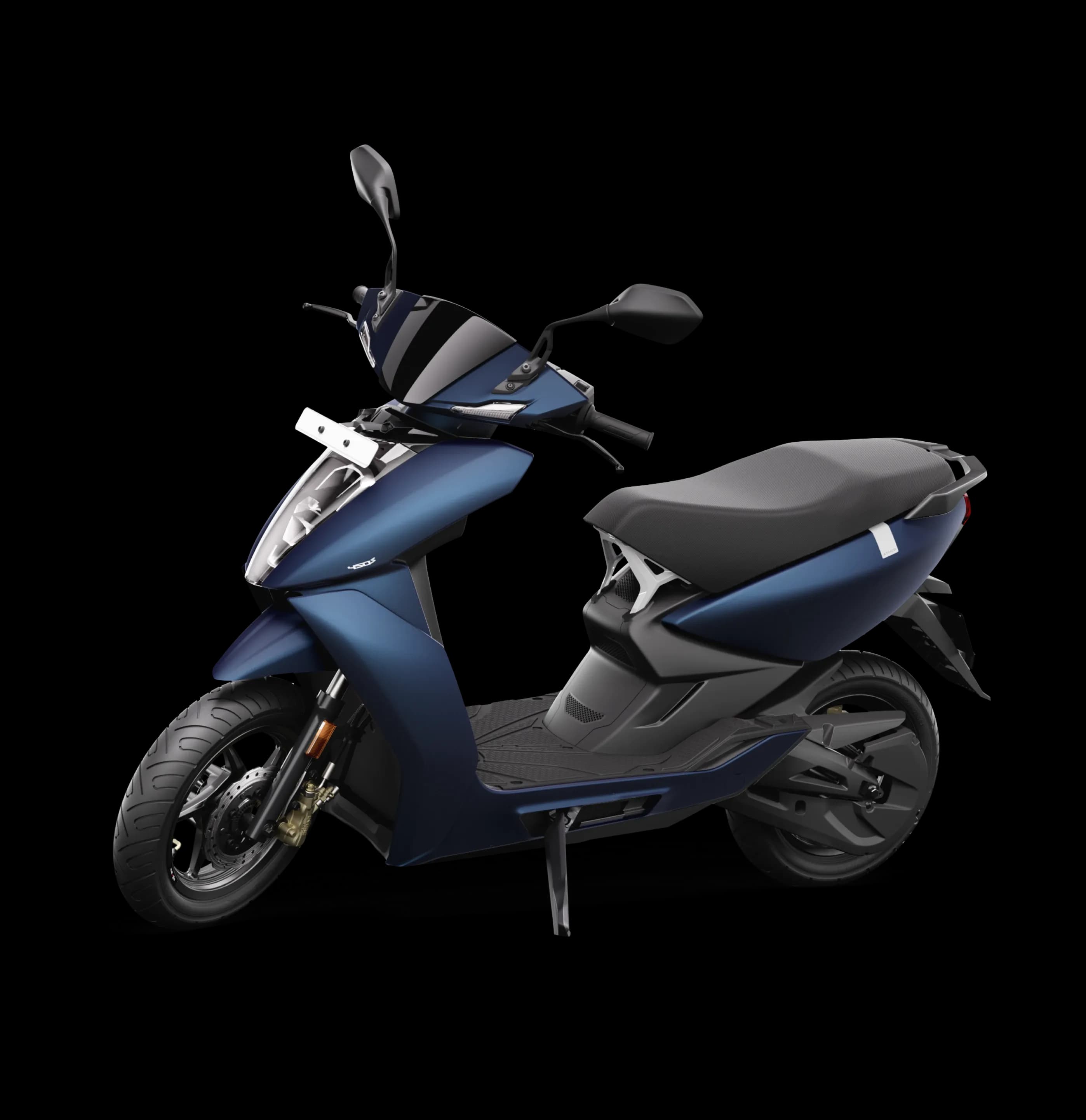
The 450S makes sense if you want a more polished and sharper-feeling urban scooter than the conservative commuter norm without stretching to the 450X. It is a credible city-performance choice, but the ownership case stays strongest when daily distances are moderate and Ather Grid coverage is actually useful in your city.
Real-world estimate.
Check if it suits your roads.
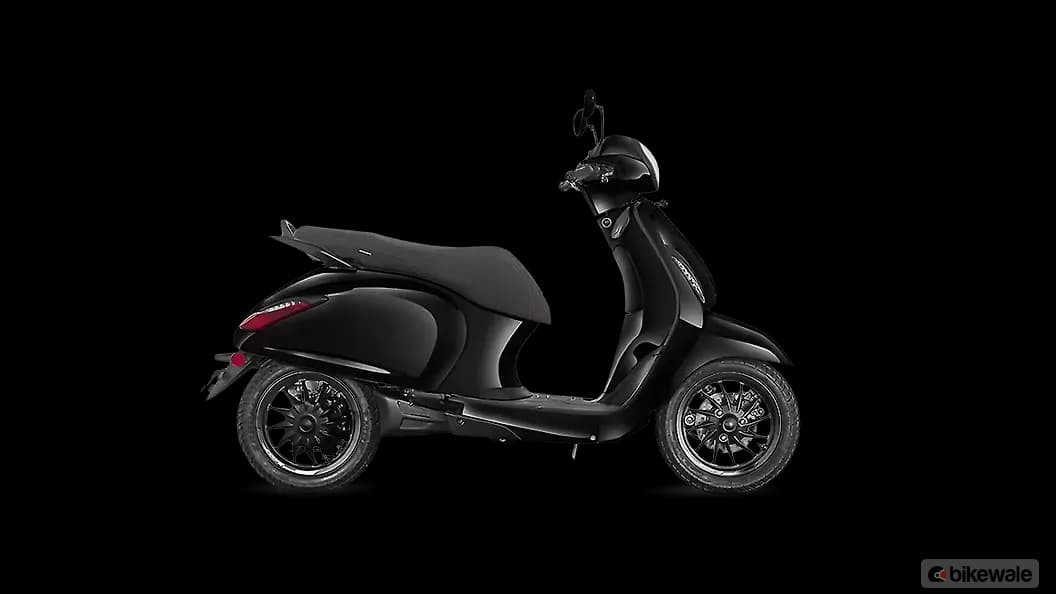
The C3501 is the top of the Chetak range: the same 3.5 kWh fixed battery and 153 km claim as the C3502, but with a 5-inch TFT touchscreen, full map navigation, keyless ignition, remote start, hill hold, reverse assist, OTA updates and geo-fencing on top. Hardware is otherwise familiar Chetak — a steel body, BLDC hub motor, 80 km/h, 12-inch alloys on tubeless tyres, a 200 mm front disc and 130 mm rear drum with CBS, single-sided leading-link front suspension, 168 mm ground clearance, a 775 mm seat, 35 litres under the seat and 5 litres up front, with 0-80% in three hours on the bundled 950 W charger and a 3-year / 50,000 km warranty. Bajaj claims 153 km; we would plan around 105 to 125 km in real city use. Best for riders who want every Chetak feature and will pay roughly ₹12,000 more than the C3502 to get the screen and connected kit.
Real-world estimate.
Check if it suits your roads.
What tips the decision
What keeps it honest
Common questions
Choose the Ather 450S if performance and software polish matter more. Choose the Bajaj Chetak 3501 if service confidence and lower-drama everyday ownership matter more.
Bajaj Chetak goes further: about 105–125 km of real-world range per charge versus 90–110 km for Ather 450S — roughly 15 km more on a typical charge.
Ather 450S is cheaper by about ₹29,300 ex-showroom: Ather 450S ₹1,27,888 (verified 2026-10-05), Bajaj Chetak ₹1,57,140 (verified 2026-10-05). On-road prices vary by state, insurance and dealer offers, so compare the final quotes.
Bajaj Chetak charges faster at home. Ather 450S takes about 8.3 hours to charge at home. Fast charging: Ather's official 450 page advertises a 30 km top-up in 10 minutes for the 450 family, but that remains an Ather Grid fast-top-up story rather than open public DC charging.. Bajaj Chetak takes about 3 hours to charge at home.
Key factors: Ather 450S has materially stronger top speed and a sportier riding brief than the calmer Chetak; Bajaj Chetak 3501 benefits from wider mainstream-brand service reassurance and a quicker full AC charge; Ather brings the stronger connected-software and rider-interface story for buyers who will actually use it; and The Chetak is easier to defend if your use is ordinary family commuting rather than performance-led city riding.
Tradeoffs to consider: Ather Grid fast top-ups are proprietary and city-dependent, so the 450S charging advantage is not a universal public-network story; Chetak 3501 gives away performance and tech edge if you want the scooter to feel more lively once traffic opens up; and The Ather's smaller battery keeps its mixed-use range story more limited than the stronger 3.5-4.0 kWh scooter field.
Sources
Reviewed 2026-04-25
Next step
Other scooter comparisons