This comparison is most useful when both scooters look viable and you need the decision to break on charging, value, or day-to-day fit.
Scooter comparison
Same brand, same 3.1 kWh battery, very different scooters. The Orbiter V2 uses a gentler motor to stretch that battery much further — about 120–135 km real-world — and costs less. The iQube 3.1 kWh trades range for more power, a front disc brake and a slightly higher top speed.
Use this comparison to break the tie on charging, value, and fit, then validate the winner with your own running-cost estimate.
| Spec | TVS OrbiterV2 3.1 kWh | TVS iQube3.1 kWh |
|---|---|---|
| Price & cost | ||
| Reference price | ₹1,19,480 | ₹1,35,465 |
| Running cost (est.) | ≈ ₹0.22/km | ≈ ₹0.32/km |
| Performance | ||
| Top speed | 68 km/h | 75 km/h |
| Motor power | 1.8 kW | 4.4 kW |
| Battery & charging | ||
| Battery | 3.1 kWh | 3.1 kWh |
| Real-world range | 120-135 km | 80-95 km |
| Efficiency | 41 km/kWh | 28 km/kWh |
| Charge time | ~4.2 hrs | ~5.1 hrs |
| Fast / 0–80% charge | 0-80% in 4 hrs 10 min; no fast charging | — |
| DC fast charge | No | No |
| Space & practicality | ||
| Under-seat storage | 34 L | 30 L |
| Kerb weight | 112 kg | 116.8 kg |
| Ground clearance | 165 mm | 157 mm |
| Wheel size | Front 14 / Rear 12 inch | 12-inch / 12-inch |
| Brakes | Drum / Drum, SBS | Disc / Drum, SBT |
| Features | ||
| Display | LCD | Digital |
| Connected (app/Bluetooth) | Yes | Yes |
| Riding modes | 2 | 2 |
| Hill hold | — | No |
| Water resistance | — | IP67 |
| Warranty | Battery 3 yr / 50,000 km | 3 yr / 50,000 km |
| Verdict | ||
| Best for | Range-first commuters — 158 km claimed is among the biggest in the family-scooter classGig and delivery riders who want maximum kilometres per rupeeBuyers who want the Orbiter's connected features (turn-by-turn navigation, calls) with the big battery | Budget-first family-scooter buyers who want a mainstream brand EVCity commuting where daily distances are modest and predictableHouseholds prioritising service-network comfort over performance theatrics |
| Verdict | The Orbiter V2 is the range flagship of TVS's budget line — the V1's practical, connected package with a 3.1 kWh battery and a 158 km claim. Best for riders who cover serious daily distance at city speeds; short-hop commuters can save with the V1. | The iQube 3.1 kWh is the lower-cost iQube ownership brief: enough battery for everyday city use, conservative performance, and a mainstream service network story. It makes most sense when your commute is short enough that home charging covers almost everything and you want a low-drama family scooter rather than a sportier EV. |
| Spec source | View source | View source |
This comparison is most useful when both scooters look viable and you need the decision to break on charging, value, or day-to-day fit.
Decision path
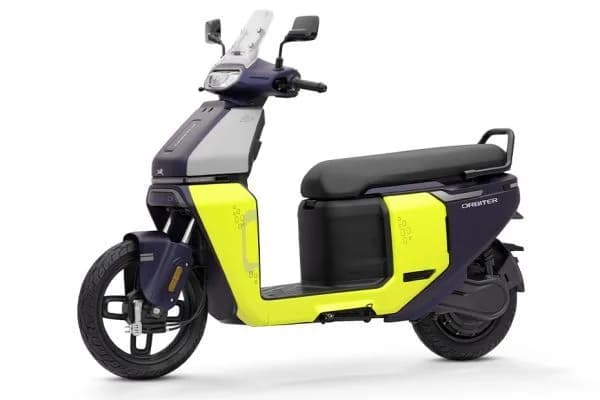
The Orbiter V2 is the range flagship of TVS's budget line — the V1's practical, connected package with a 3.1 kWh battery and a 158 km claim. Best for riders who cover serious daily distance at city speeds; short-hop commuters can save with the V1.
Real-world estimate.
Check if it suits your roads.
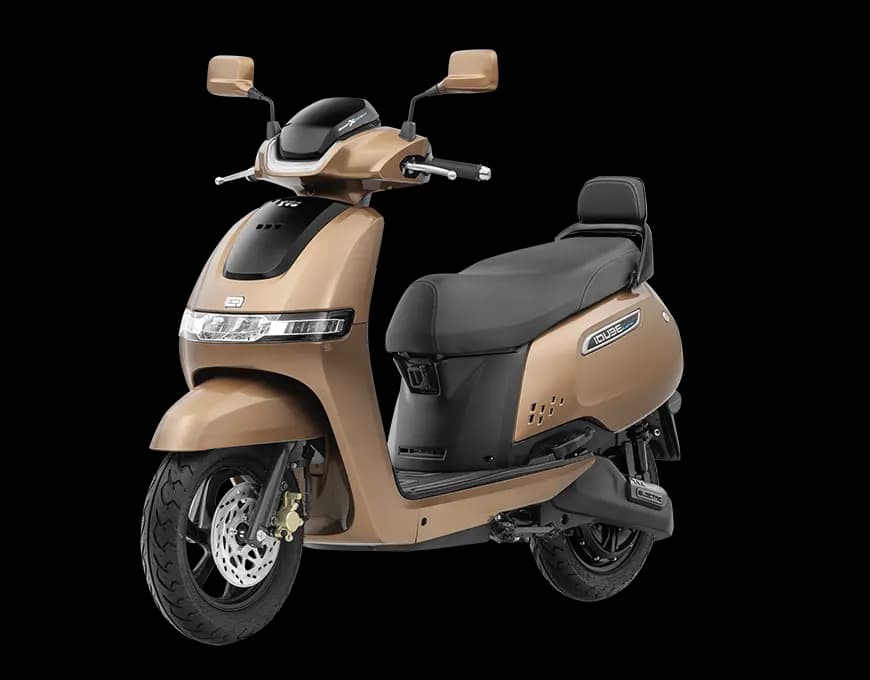
The iQube 3.1 kWh is the lower-cost iQube ownership brief: enough battery for everyday city use, conservative performance, and a mainstream service network story. It makes most sense when your commute is short enough that home charging covers almost everything and you want a low-drama family scooter rather than a sportier EV.
Real-world estimate.
Check if it suits your roads.
What tips the decision
What keeps it honest
Common questions
Pick the TVS Orbiter V2 if range per rupee is what you are buying — it covers far more kilometres on the same battery for less money, which suits long commutes and delivery work. Pick the TVS iQube 3.1 kWh if you ride two-up on flyovers or want the front disc brake and quicker pickup.
TVS Orbiter goes further: about 120–135 km of real-world range per charge versus 80–95 km for TVS iQube — roughly 40 km more on a typical charge.
TVS Orbiter is cheaper by about ₹16,000 ex-showroom: TVS Orbiter ₹1,19,480 (verified 2026-10-04), TVS iQube ₹1,35,465 (verified 2026-10-04). On-road prices vary by state, insurance and dealer offers, so compare the final quotes.
TVS Orbiter charges faster at home. TVS Orbiter takes about 4.2 hours to charge at home. TVS iQube takes about 5.1 hours to charge at home.
Key factors: The Orbiter V2 goes roughly 40 km further per charge on the same 3.1 kWh battery (120–135 km versus 80–95 km); The Orbiter V2 is the cheaper of the two ex-showroom; The iQube's 4.4 kW motor is much stronger than the Orbiter's 1.8 kW — it matters with a pillion and on climbs; The iQube has a front disc brake; the Orbiter V2 uses drums at both ends; and The Orbiter's 14-inch front wheel, 34-litre boot and 165 mm ground clearance suit rough city roads.
Tradeoffs to consider: The Orbiter V2 tops out at 68 km/h — fine in town, slow on faster ring roads; Neither has fast charging; both take a little over four hours to reach 80% at home; The Orbiter's drum brakes are a real step down if you ride in heavy traffic or rain; and The iQube's stronger motor uses the battery faster, which is exactly why its range is lower.
The Orbiter V2 uses a 1.8 kW motor against the iQube's 4.4 kW. Less power and a lower 68 km/h top speed mean it uses less energy per kilometre, so the same 3.1 kWh battery covers roughly 120–135 km instead of 80–95 km. You give up pickup and top speed in exchange.
It works for a pillion on flat city roads, but its 1.8 kW motor feels strained two-up on flyovers and climbs. If you regularly carry a passenger, the iQube 3.1 kWh's stronger motor and front disc brake are worth the extra cost.
Sources
Reviewed 2026-10-04
Next step
Other scooter comparisons